

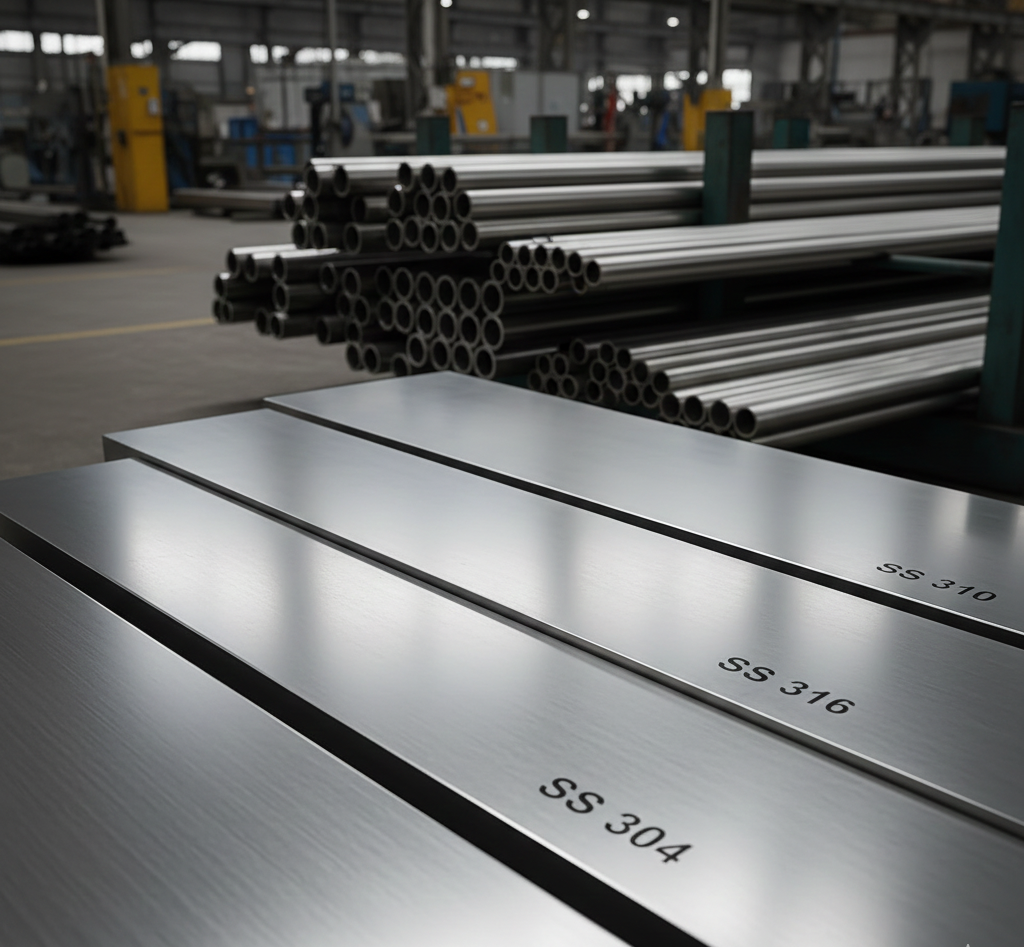
Corrosion is one of the biggest threats to industrial equipment, pipelines, and structural components. Exposure to moisture, chemicals, heat, and aggressive environments can drastically reduce the life of ordinary metals. This is where stainless steel stands apart.
Used extensively in food processing, pharmaceuticals, construction, and heavy industry, stainless steel owes its popularity to its natural resistance to corrosion. In this blog, we break down the science behind this property and clearly explain the differences between SS 304, SS 316, and SS 310 grades to help you choose the right material for your application.
1. Why Stainless Steel Resists Corrosion
Unlike ordinary carbon steel, stainless steel is an alloy engineered to protect itself against rust and chemical attack.
Key Alloying Elements
Chromium
Chromium is the most critical element in stainless steel. When exposed to oxygen, it forms a thin protective oxide layer on the surface, acting as a barrier against rust and corrosion.
Nickel
Nickel improves toughness, strength, and resistance to corrosion, especially in demanding environments where temperature and pressure fluctuate.
Molybdenum
Molybdenum significantly enhances resistance to pitting and crevice corrosion, particularly in chloride-rich and chemical environments.
This carefully balanced composition allows stainless steel pipes, sheets, and fittings to perform reliably in harsh industrial conditions.
2. The Passive Layer: Stainless Steel’s Self‑Protecting Shield
One of the most important scientific advantages of stainless steel is its passive layer.
Chromium reacts with oxygen to form an invisible oxide film
This layer prevents moisture and chemicals from attacking the metal beneath
If the surface is scratched or damaged, the layer reforms automatically in the presence of oxygen
This self‑healing behavior is the reason stainless steel maintains its corrosion resistance over long service periods, even in continuous operation.
3. Understanding Stainless Steel Grades: 304 vs 316 vs 310
Choosing the correct grade is essential for performance, safety, and cost control.
SS 304 – General Purpose Grade
Characteristics:
Excellent corrosion resistance in normal environments
Good strength and formability
Economical and widely available
Common Applications:
Food processing equipment
Water pipelines and storage
Structural and fabrication work
SS 304 is ideal for applications where exposure to extreme chemicals or high temperatures is limited.
SS 316 – Enhanced Corrosion Resistance
Characteristics:
Contains molybdenum for superior resistance
Performs well in chemical and marine environments
Higher durability in aggressive conditions
Common Applications:
Pharmaceutical manufacturing
Chemical processing plants
Coastal and high‑humidity installations
SS 316 is preferred where corrosion resistance and hygiene are critical.
SS 310 – High Temperature Performance
Characteristics:
High chromium and nickel content
Excellent resistance to oxidation at elevated temperatures
Maintains strength under continuous heat exposure
Common Applications:
Furnaces and heat treatment equipment
Cement and heavy industrial plants
High‑temperature pipelines and ducts
SS 310 is specifically designed for environments involving extreme heat rather than chemical exposure alone.
4. Industrial Applications of Corrosion‑Resistant Stainless Steel
Industries depend on stainless steel for long-term reliability:
Food & Beverage: Hygienic, non‑reactive processing systems
Pharmaceuticals: Clean, sterile, and compliant production environments
Construction & Infrastructure: Durable piping and structural components
Industrial Piping Systems: Leak‑resistant stainless steel pipes and fittings
Correct grade selection ensures safety, efficiency, and reduced maintenance costs.
5. Sourcing Quality Stainless Steel in Pakistan
The performance of stainless steel depends not only on grade selection but also on material quality. Imported stainless steel manufactured under international standards is widely trusted for industrial use.
Saify Iron & Cement Mart supplies a comprehensive range of stainless steel products, including:
Stainless steel pipes (SS 304, SS 316 & SS 310)
Stainless steel sheets and plates
Flat bars, angles, and channels
Industrial-grade stainless steel fittings
Our focus is on supplying consistent, reliable materials suitable for demanding industrial applications across Pakistan.
Conclusion
The corrosion resistance of stainless steel is the result of smart metallurgy, self‑healing surface protection, and carefully engineered alloy compositions. Understanding the differences between SS 304, SS 316, and SS 310 helps ensure the right material is used for the right environment.
By sourcing high‑quality stainless steel from a trusted supplier, industries can achieve longer service life, safer operations, and lower maintenance costs.
Saify Iron & Cement Mart is committed to supporting industrial projects with dependable stainless steel solutions tailored to real‑world conditions.