

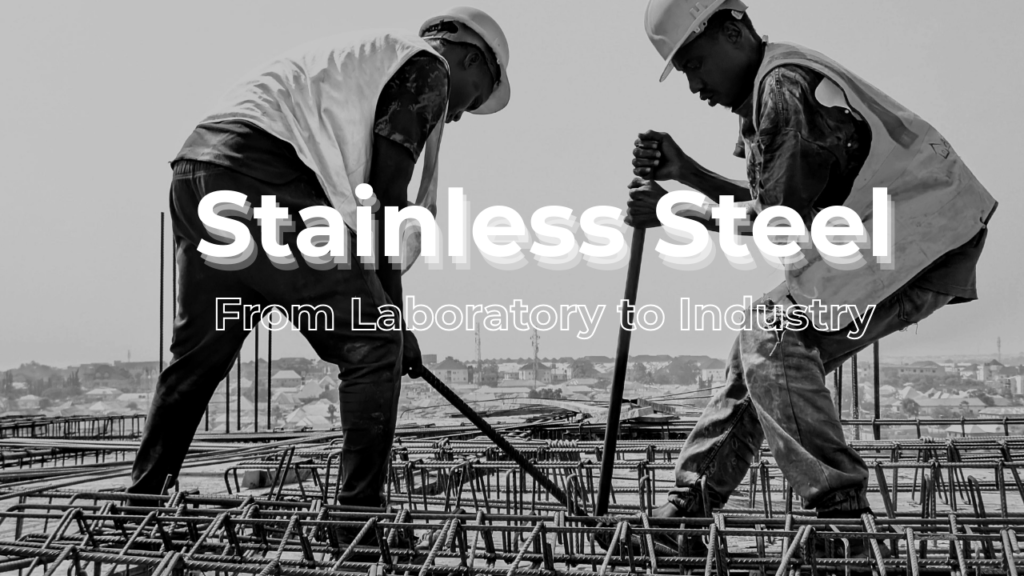
Stainless steel is widely regarded as the backbone of modern industry. Its strength, corrosion resistance, and long service life have made it an essential material across construction, manufacturing, food processing, pharmaceuticals, medical equipment, energy, and infrastructure.
From its early development in the 20th century to its widespread industrial use today, stainless steel represents one of the most important advancements in materials engineering. Its ability to perform reliably in demanding environments has enabled industries to improve safety, hygiene, efficiency, and durability.
Stainless steel is now found everywhere—from food production facilities and medical instruments to high-rise buildings and energy infrastructure. Understanding how this material evolved helps explain why it remains so widely used today.
The Discovery of Stainless Steel
The development of stainless steel began in 1912 with the work of Harry Brearley, a metallurgist in Sheffield, England. While experimenting with steel compositions to improve wear resistance for rifle barrels, Brearley added chromium to iron.
Although the initial goal was not achieved, the experiment led to an unexpected and critical discovery: the chromium-containing steel resisted rust and corrosion.
This property was due to the formation of a thin protective oxide layer on the surface of the steel. When chromium content reaches approximately 12% or higher, this layer prevents moisture and oxygen from penetrating the metal, significantly reducing corrosion.
This discovery marked the beginning of stainless steel as an industrial material and laid the foundation for its future development.
Post-War Expansion and Industrial Adoption
The use of stainless steel increased significantly after World War II, when industries and infrastructure needed durable, reliable materials for rebuilding and expansion. Stainless steel’s resistance to corrosion, ease of cleaning, and long service life made it particularly suitable for applications where performance and hygiene were critical.
During this period, stainless steel began replacing traditional materials such as mild steel and galvanized steel in many applications, including pipes, tanks, processing equipment, and machinery.
At the same time, advancements in alloy development expanded stainless steel’s capabilities and applications:
Food and Beverage Industry: Stainless steel became essential in dairy, brewing, and food processing due to its hygienic, non-reactive surfaces.
Pharmaceutical Manufacturing: Its ability to maintain sterile conditions made it the preferred material for cleanrooms, vessels, and pipelines.
Architecture and Construction: Stainless steel gained popularity for its strength, corrosion resistance, and modern aesthetic appeal in buildings and monuments.
Stainless Steel in Critical Applications
Today, stainless steel is indispensable in applications where durability, hygiene, and corrosion resistance are non-negotiable.
Key industries include:
Construction and Infrastructure: Stainless steel is used in structural components, facades, railings, and iconic structures where strength and appearance are equally important.
Automotive Industry: Lightweight yet strong stainless steel components help reduce vehicle weight while maintaining safety and performance.
Energy Sector: Offshore oil rigs, power plants, and renewable energy systems rely on stainless steel to withstand harsh environments, chemicals, and extreme weather.
The wide range of stainless steel grades allows it to meet these diverse requirements. Austenitic, ferritic, and duplex stainless steels are selected based on factors such as corrosion exposure, strength requirements, and operating conditions.
Why Stainless Steel Remains Unmatched
Despite ongoing advancements in materials science, stainless steel continues to outperform many alternative materials when evaluated over the full lifecycle.
Aluminum is lightweight but may lack sufficient corrosion resistance in aggressive environments.
Plastics are economical but degrade over time and raise environmental concerns.
Titanium offers excellent performance but is often cost-prohibitive for widespread industrial use.
Stainless steel provides a balanced combination of performance, cost efficiency, durability, and sustainability. Its recyclability and long service life further strengthen its position as the preferred material across industries.
A Century of Continuous Innovation
Over the past century, stainless steel has evolved into a symbol of quality and reliability. Improvements in metallurgy, processing techniques, and alloy composition have continuously enhanced its performance.
As industries adopt new technologies and face stricter environmental and safety standards, stainless steel continues to adapt. It remains relevant in modern applications such as renewable energy systems, transportation networks, and advanced manufacturing facilities.
This ability to evolve ensures that stainless steel will continue to meet the demands of future industries.
Conclusion
Stainless steel’s journey from an accidental discovery to an industrial necessity highlights the importance of innovation in materials engineering. Its corrosion resistance, strength, hygienic properties, and sustainability have made it a cornerstone of modern industry worldwide.
For businesses involved in construction, manufacturing, food processing, pharmaceuticals, and infrastructure, stainless steel remains a proven and future-ready material.
Saify Iron & Cement Mart supports Pakistan’s industrial sector by supplying reliable stainless steel products suited to demanding applications, helping clients achieve long-term performance and operational confidence.