
Procurement teams play a critical role in ensuring project quality, cost control, and long-term performance—especially when sourcing stainless steel for industrial, construction, pharmaceutical, food, and manufacturing applications.
In Pakistan’s industrial environment, selecting the wrong stainless steel grade or supplier can lead to premature corrosion, maintenance issues, compliance risks, and increased lifecycle costs.
This blog explains the key factors procurement teams should evaluate before purchasing stainless steel, helping ensure durability, compliance, and value for money.
Understanding Stainless Steel Requirements
Stainless steel is not a single material but a family of alloys with different chemical compositions and performance characteristics. Grades such as SS 304 and SS 316 are commonly used in Pakistan, but each is designed for specific environments and applications.
Before procurement, it is essential to clearly define:
Application environment (humidity, chemicals, temperature)
Industry requirements (construction, pharma, food, manufacturing)
Performance expectations and service life
Clear specifications help avoid mismatches between material and application.
Key Factors Procurement Teams Should Check
Correct Stainless Steel Grade Selection
Choosing the appropriate grade is the most important procurement decision.
SS 304 is suitable for general-purpose applications, indoor use, and environments with low corrosion exposure.
SS 316 offers higher corrosion resistance and is preferred for chemical exposure, coastal regions, pharmaceutical, food, and industrial applications.
Using the wrong grade may reduce upfront cost but significantly increases long-term risk.
Compliance with Standards and Certifications
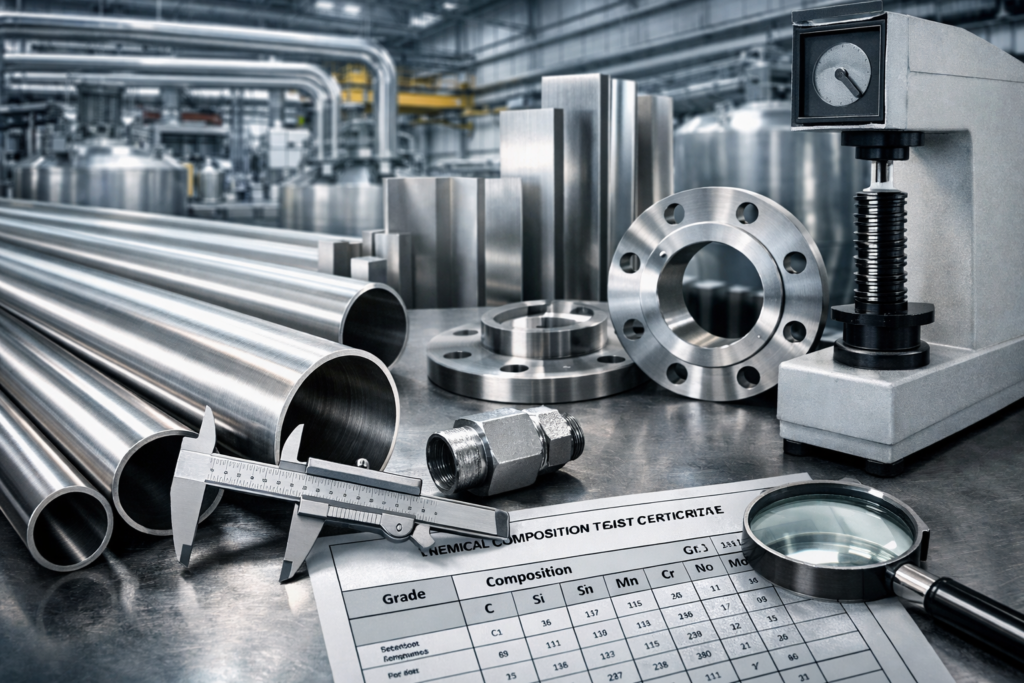
Procurement teams should ensure stainless steel materials comply with recognized international standards such as ASTM or equivalent specifications.
Important checks include:
Material test certificates (MTCs)
Chemical composition verification
Mechanical property compliance
Standard-compliant materials ensure consistent performance and regulatory acceptance.
Quality and Surface Finish
Surface quality impacts both performance and maintenance.
Procurement teams should assess:
Uniform surface finish
Absence of visible defects or contamination
Suitability of finish for hygienic or industrial use
For pharma and food industries, smooth and cleanable surfaces are essential.
Supplier Reliability and Traceability
A reliable supplier ensures consistent quality, proper documentation, and timely delivery.
Procurement teams should evaluate:
Supplier reputation and industry experience
Ability to provide traceable material documentation
Stock availability and supply consistency
Strong supplier relationships reduce procurement risks and project delays.
Total Lifecycle Cost, Not Just Price
While price is an important consideration, procurement decisions should focus on total lifecycle cost rather than initial purchase cost.
Stainless steel with higher quality and correct grade selection offers:
Reduced maintenance
Longer service life
Lower replacement and downtime costs
Evaluating lifecycle value leads to better long-term outcomes.
Industry-Specific Considerations in Pakistan
Different industries have unique requirements that procurement teams must consider:
Construction: Corrosion resistance, structural reliability, and aesthetics
Pharmaceuticals: Hygiene, chemical resistance, and regulatory compliance
Food Processing: Non-reactive surfaces and easy cleaning
Manufacturing & Industrial Plants: Resistance to heat, chemicals, and mechanical stress
Aligning material selection with industry needs is essential for performance and safety.
Stainless Steel Procurement Challenges in Pakistan
Common challenges include:
Inconsistent material quality in the market
Limited verification of material grades
Price-driven purchasing without technical evaluation
Procurement teams that prioritize technical assessment and supplier credibility can avoid these risks.
Saify Iron & Cement Mart – Supporting Reliable Stainless Steel Procurement
Saify Iron & Cement Mart supplies quality stainless steel products to industrial and construction clients across Pakistan.
Our stainless steel range includes:
SS 304 and SS 316 pipes
Stainless steel sheets and plates
Flat bars, angles, and channels
Industrial-grade stainless steel fittings
We focus on supplying materials that meet industry requirements for performance, durability, and consistency.
Conclusion
Effective stainless steel procurement requires more than comparing prices. Procurement teams must evaluate grade selection, standards compliance, supplier reliability, and lifecycle value to ensure long-term success.
By following a structured procurement approach and choosing trusted suppliers, organizations in Pakistan can reduce risk, improve performance, and achieve better project outcomes.
Saify Iron & Cement Mart remains committed to supporting procurement teams with dependable stainless steel solutions for Pakistan’s growing industrial and construction sectors.